Skip to content
MSdean
Contact Us

Custom Heating Components & Assemblies

Heat where it’s needed.
Built around your product.

MSdean develops tubular heating elements, heating plates and shaped assemblies around your drawing, electrical requirements and installation.

From the heating brief to an approved component
  • Shape, mounting and connections considered together
  • Supply voltage, heat output and operating conditions reviewed
  • Sample approval and agreed checks before production release
Get in touch
Illustrative range of tubular heaters, heating plates and shaped heating components
Heating component examples · concept illustration
Drawing-ledShape and installation defined
Matched outputVoltage and duty considered
Connected designMounting and terminals reviewed
Agreed checksAcceptance set for the project

Build the Heater Around Its Working Conditions

Bring the heat requirement, electrical specification and installation into the same conversation.

Heating requirement

Start with the heat.
Then define the component.

The required heat output is only part of the specification. The medium being heated, contact conditions, available space and duty cycle all influence the heating component.

  • Electrical requirementConfirm the supply voltage and required heat output for the intended operating conditions.
  • Heat transfer & dutyDescribe the heated medium, contact or flow conditions, target temperature and operating cycle.
  • Service environmentShare the expected moisture, contamination, vibration and other conditions relevant to the design.
Review your heating brief
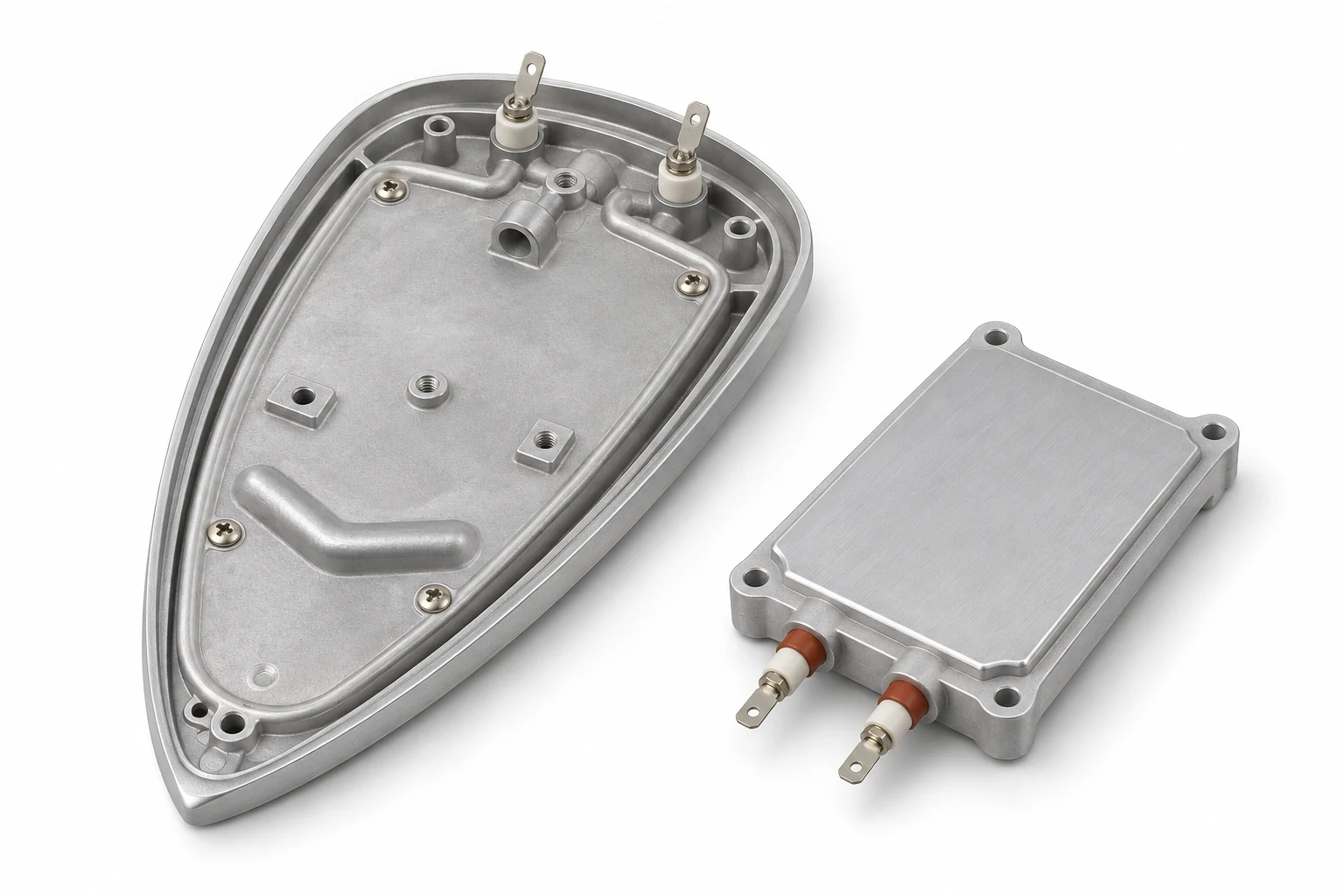
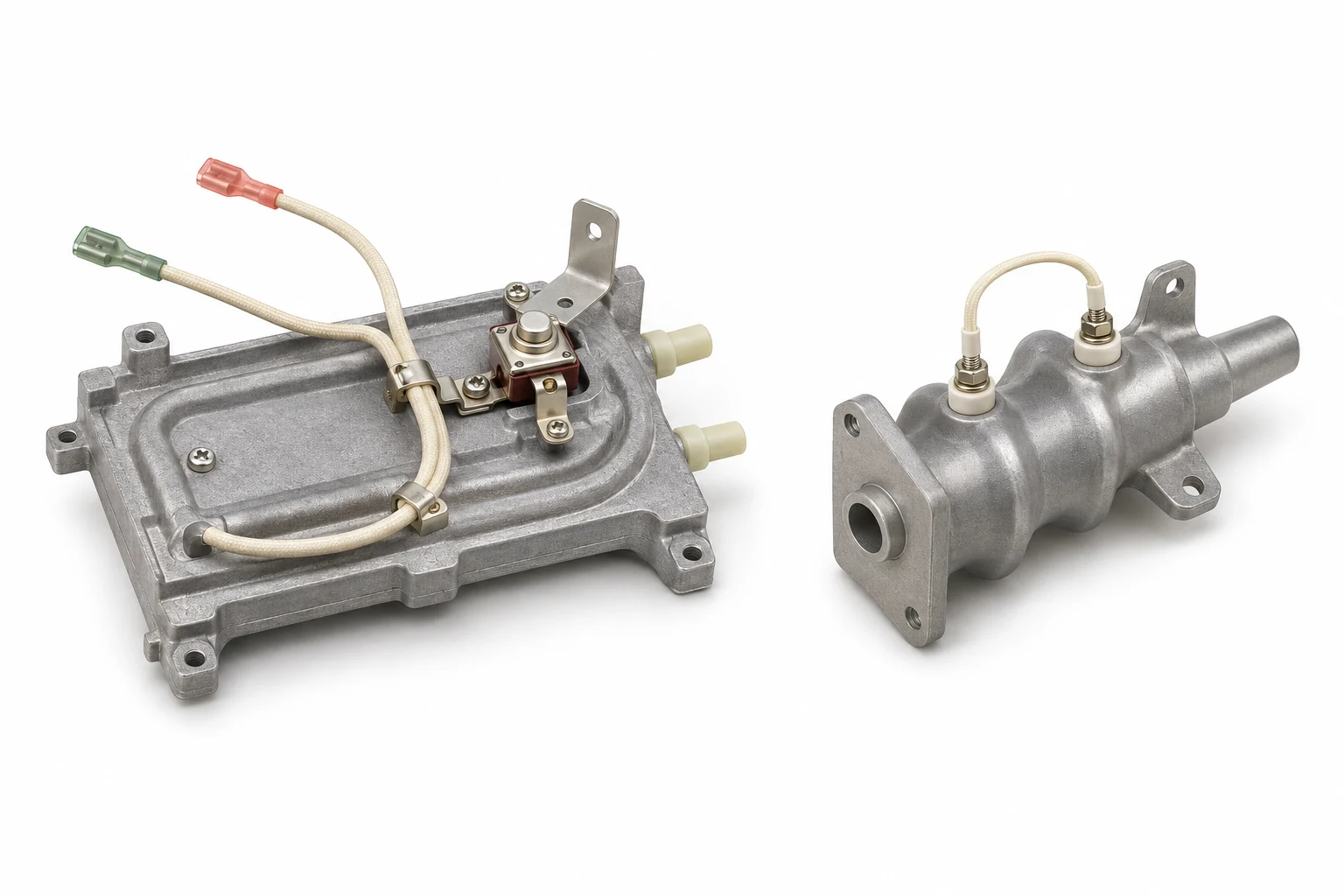
Illustrative shaped heater assemblies developed around product geometry
Geometry & integration

Fit the heater
to the product around it.

Tube shape, mounting faces and connection positions should be reviewed as one installation. Metal-integrated heating plates add their own casting and machining requirements to the heating element design.

  • Shape & clearanceIdentify the required profile, installation envelope and the features that locate the component.
  • Contact & mountingReview the contact surfaces, fixing points and any metal body or plate used to transfer heat.
  • Connections & accessSpecify lead routing, terminal position and the space needed for installation and servicing.
Explore heating component types
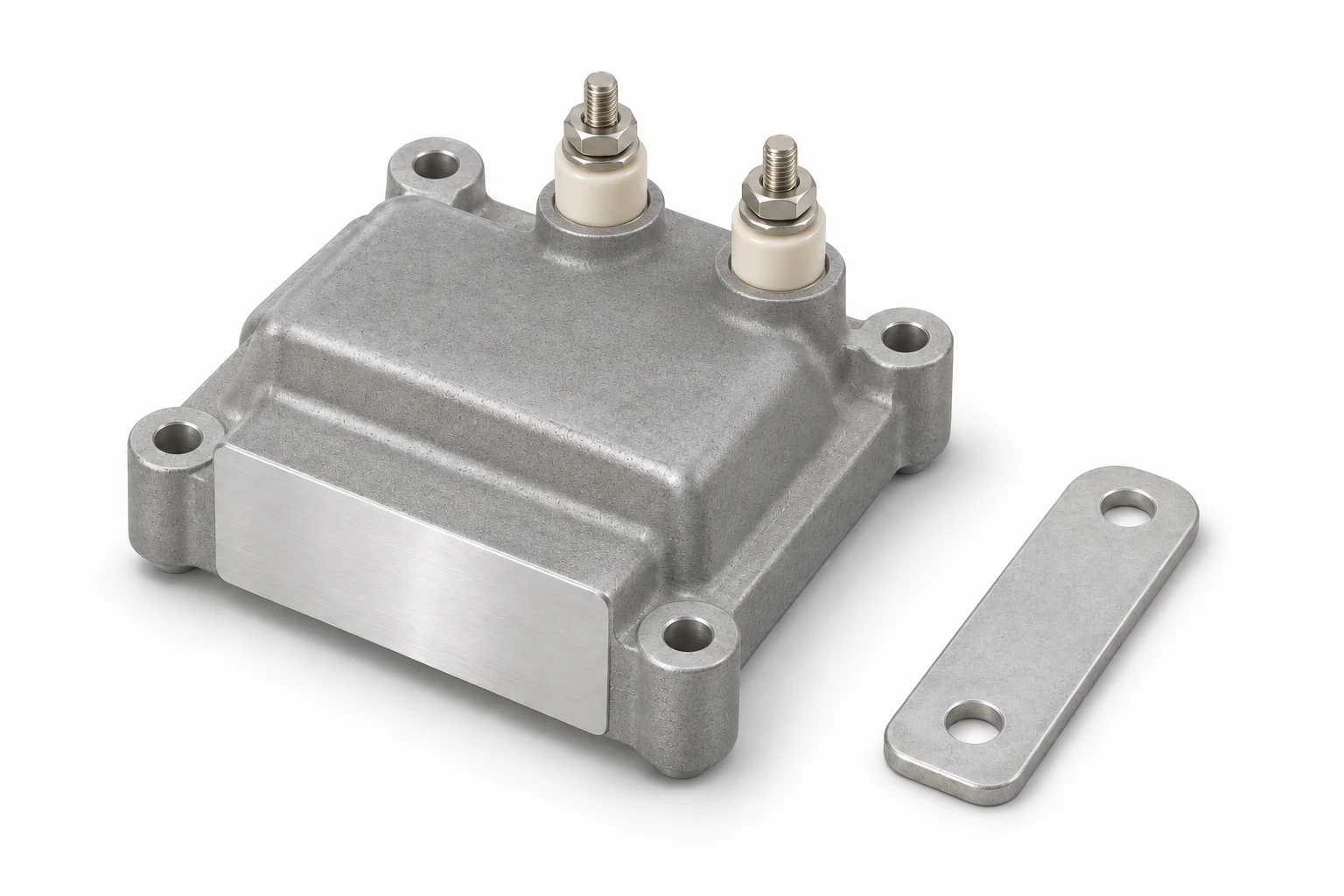
Illustrative mounting interfaces and terminal access on a heating component
Checks & approval

Agree the checks.
Approve the working sample.

Dimensions, electrical condition and installed heating behavior answer different questions. Define the checks and review the sample in conditions that represent the intended application.

  • Dimensional reviewCheck the drawing features that control shape, mounting, contact and terminal position.
  • Electrical checksDefine continuity, insulation resistance and dielectric strength checks in the agreed test plan.
  • Application reviewConfirm the sample evaluation, control and protection interfaces, acceptance criteria and required records.
Discuss your inspection requirements
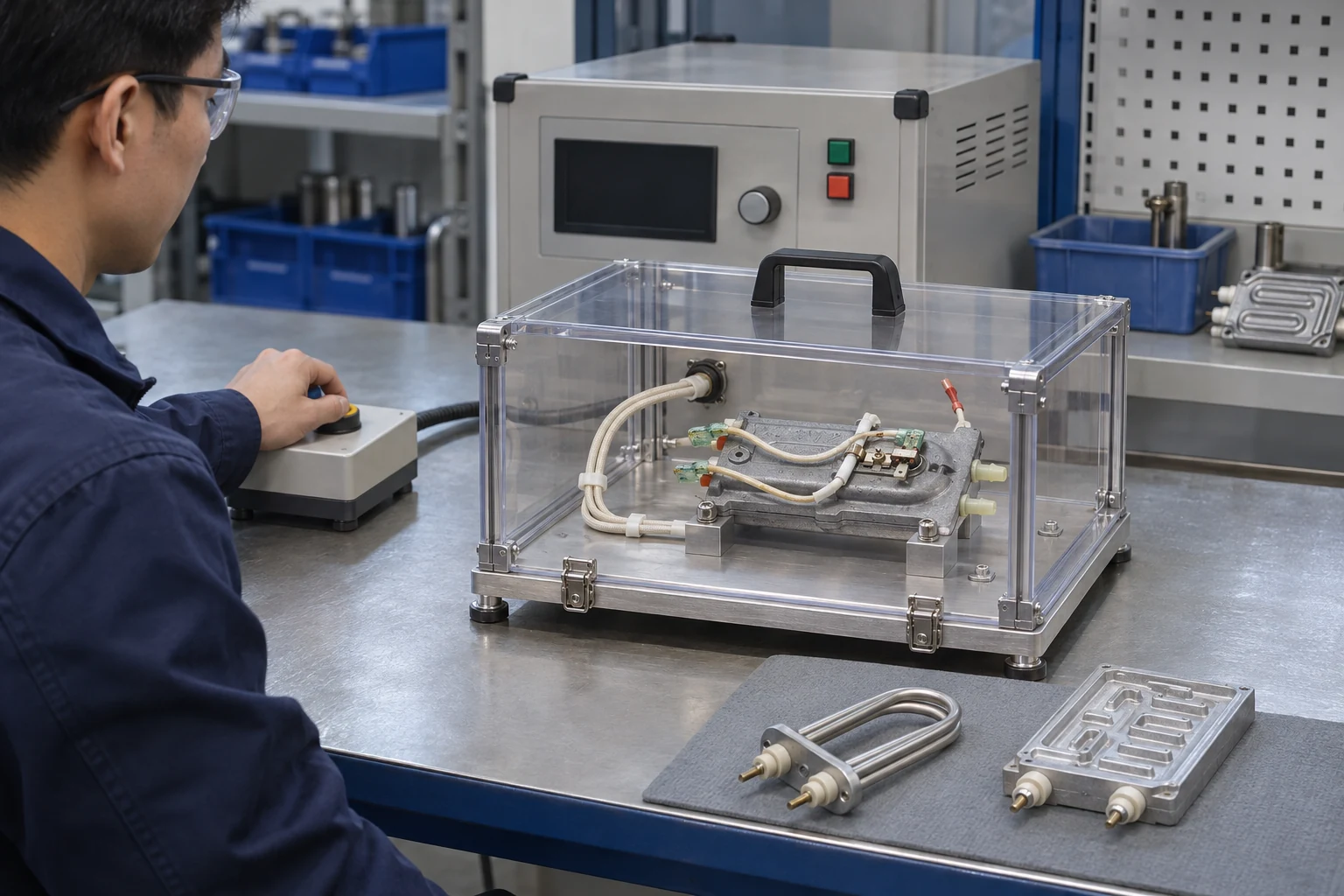
Illustrative electrical inspection of a heating component in a guarded checking station

Generated illustrations show representative products and operations. They are not photographs of MSdean equipment or customer projects.

Explore Heating Component Types

Choose a product form to see the details that shape its specification.

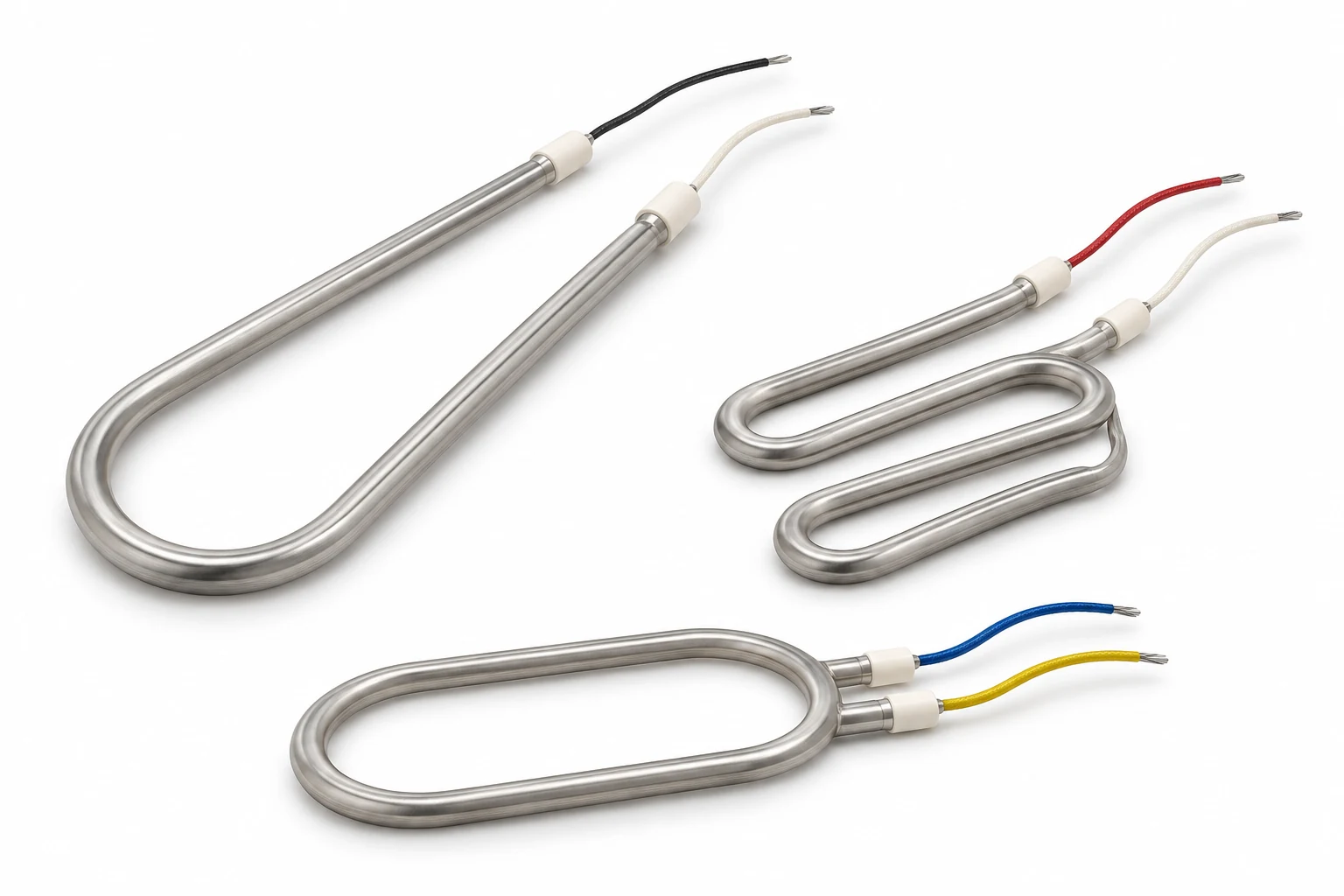
Illustrative shaped tubular heating elements with defined end connections

A heating element shaped for the installation

Specify the profile, heat output and connections

Tubular heating elements can be developed to a required profile with selected sheath, insulation and termination materials. The design is reviewed against the application and electrical specification.

  • Profile, mounting points and available space defined
  • Voltage, required output and working conditions reviewed
  • Terminal position, leads and unheated end regions considered
Review a tubular heating element

From Heating Brief to Production Component

Keep the heating element, metal interfaces and approval requirements connected through development.

  1. Illustrative heating components for specification review
    01

    Define the Brief

    Review the drawing, supply voltage, heat output, installation and service conditions.

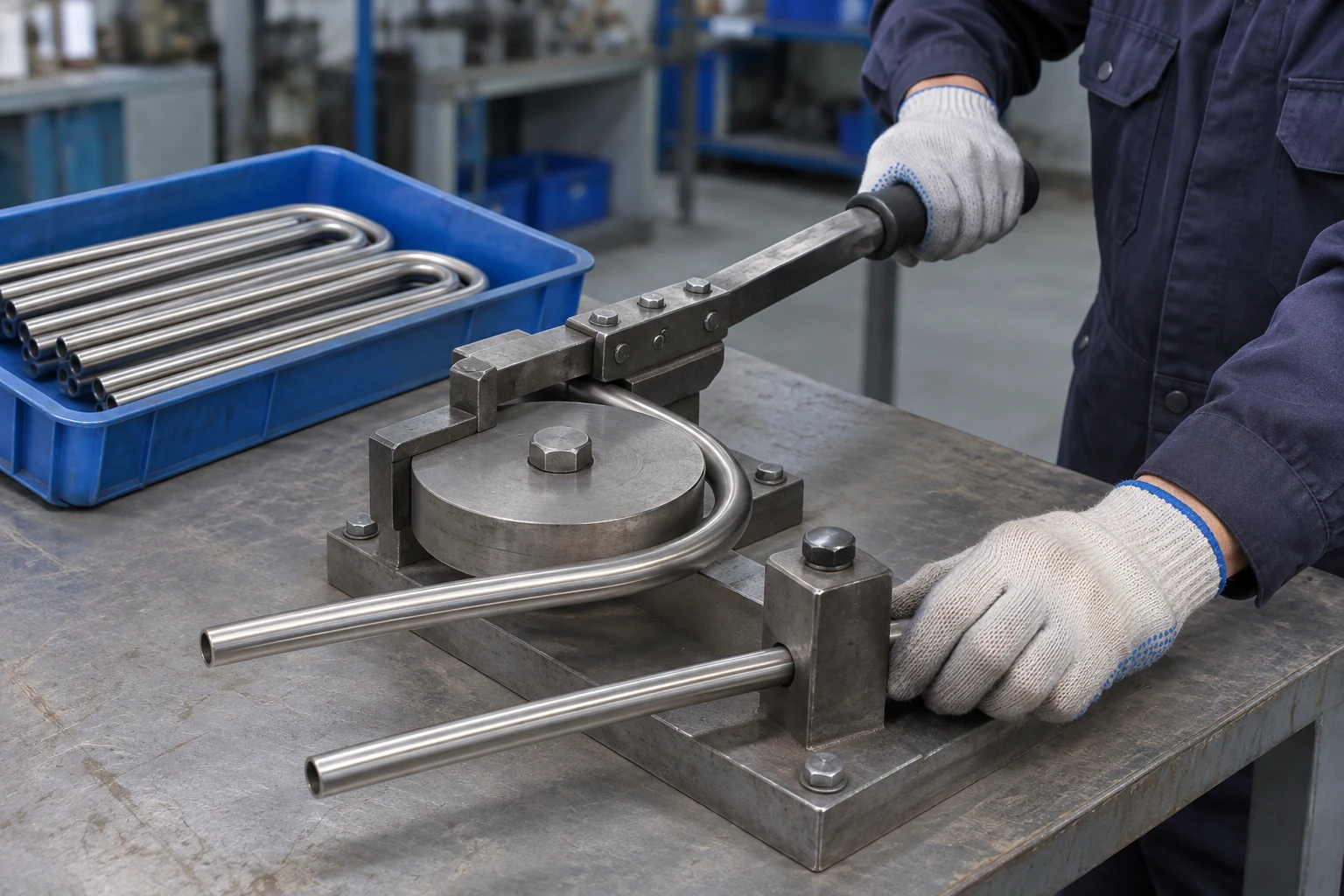
  2. Illustrative forming of a tubular heating element
    02

    Develop the Element

    Plan the heating element construction, profile and specified end regions.

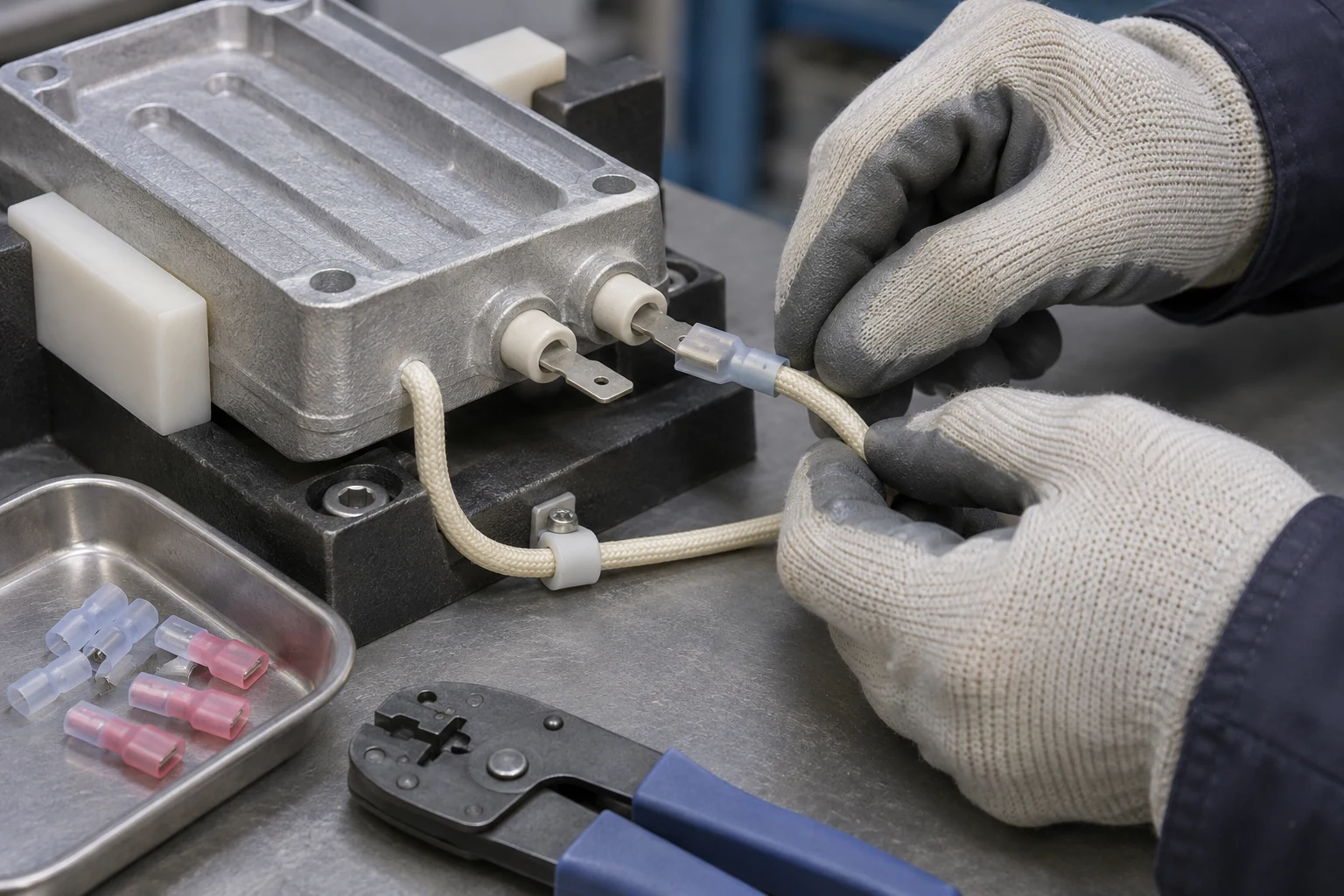
  3. Illustrative terminal and lead assembly on a heating component
    03

    Complete the Interfaces

    Prepare the specified connections, mounting features and any integrated metal body.

  4. Illustrative electrical checking of a heating component
    04

    Check the Component

    Carry out the dimensional and electrical checks defined in the agreed plan.

  5. Illustrative sample evaluation of a heating component
    05

    Approve the Sample

    Review the sample and required application evaluation before the design is released.

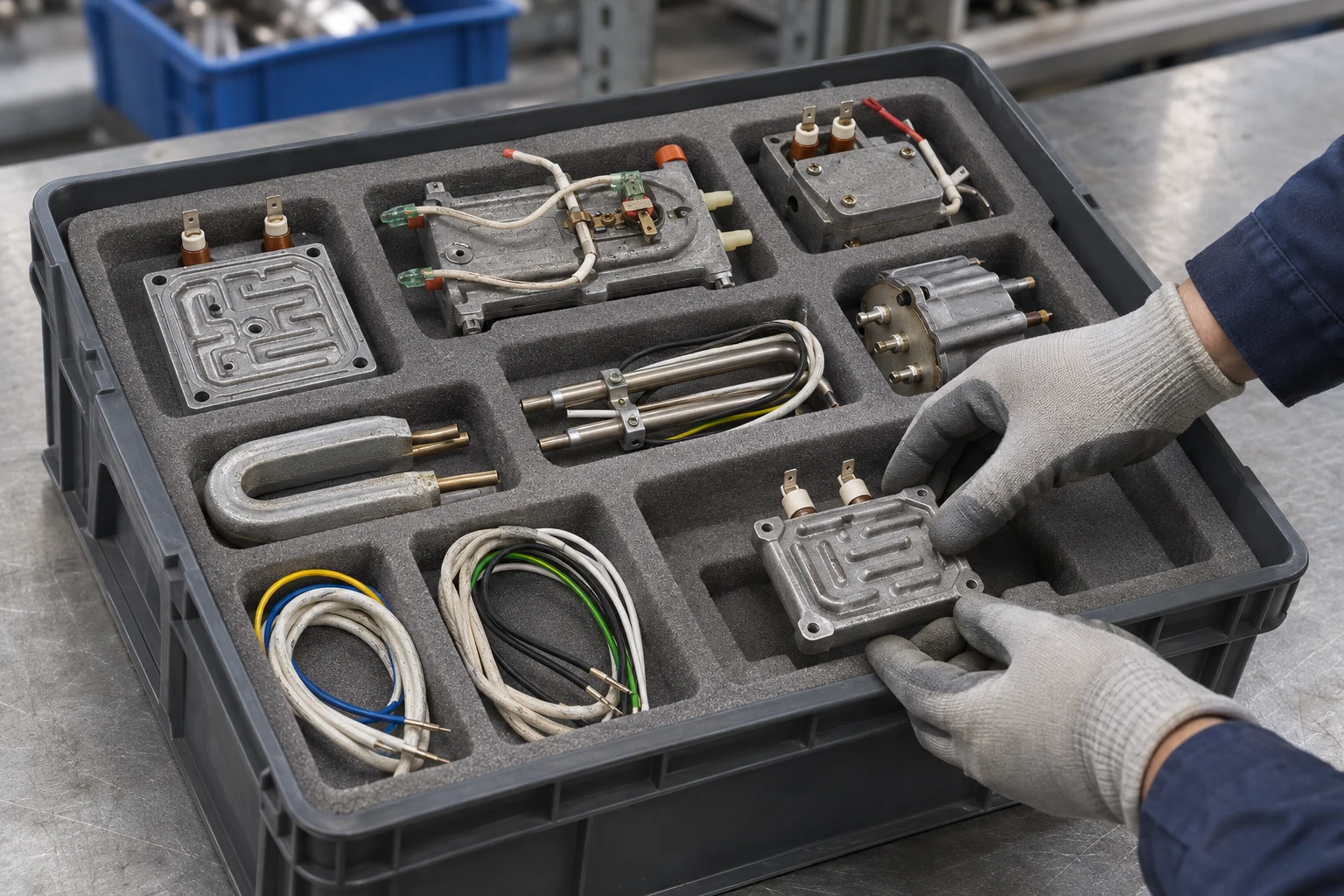
  6. Illustrative protective packing of finished heating components
    06

    Protect Delivery

    Protect the element, leads and terminals with the agreed packing and identification.

Define the Checks for Your Heater

Agree what the component must meet, how it will be checked and which results are needed for approval.

Dimensions & Installation

The drawing needs to describe how the heater locates in the product. Check the features that control profile, mounting, contact and access to connections.

  • Tube profile, mounting features and drawing revision
  • Contact surfaces, clearance and terminal position
  • Specified inspection method and required records
Electrical Checks

Continuity, insulation resistance and dielectric strength checks follow the agreed test plan. Define the method, conditions, acceptance limits and records for the particular heater specification.

  • The required electrical checks and acceptance limits
  • Test conditions, scope and frequency agreed for the project
  • Results linked to the specified component and revision
Sample & Application Review

A heater rating alone does not define its temperature in every installation. Review the sample with the intended heat transfer, duty, controls and protection arrangements.

  • Representative contact, flow and operating conditions
  • Required heating behavior and approval criteria
  • Product-specific documentation for the intended appliance and market
Illustrative dimensional inspection of a heating component
Geometry and mounting review · process illustration

Fewer Open Questions Before Production

One Heating Brief

Define the electrical requirement, working conditions and installation in one project scope.

Connected Interfaces

Consider the element, metal body, mounting and connections as parts of the same product.

A Working Reference

Use the approved drawing, sample and test plan to define the production requirement.

Protected Components

Plan handling and packing around the element shape, leads, terminals and contact surfaces.

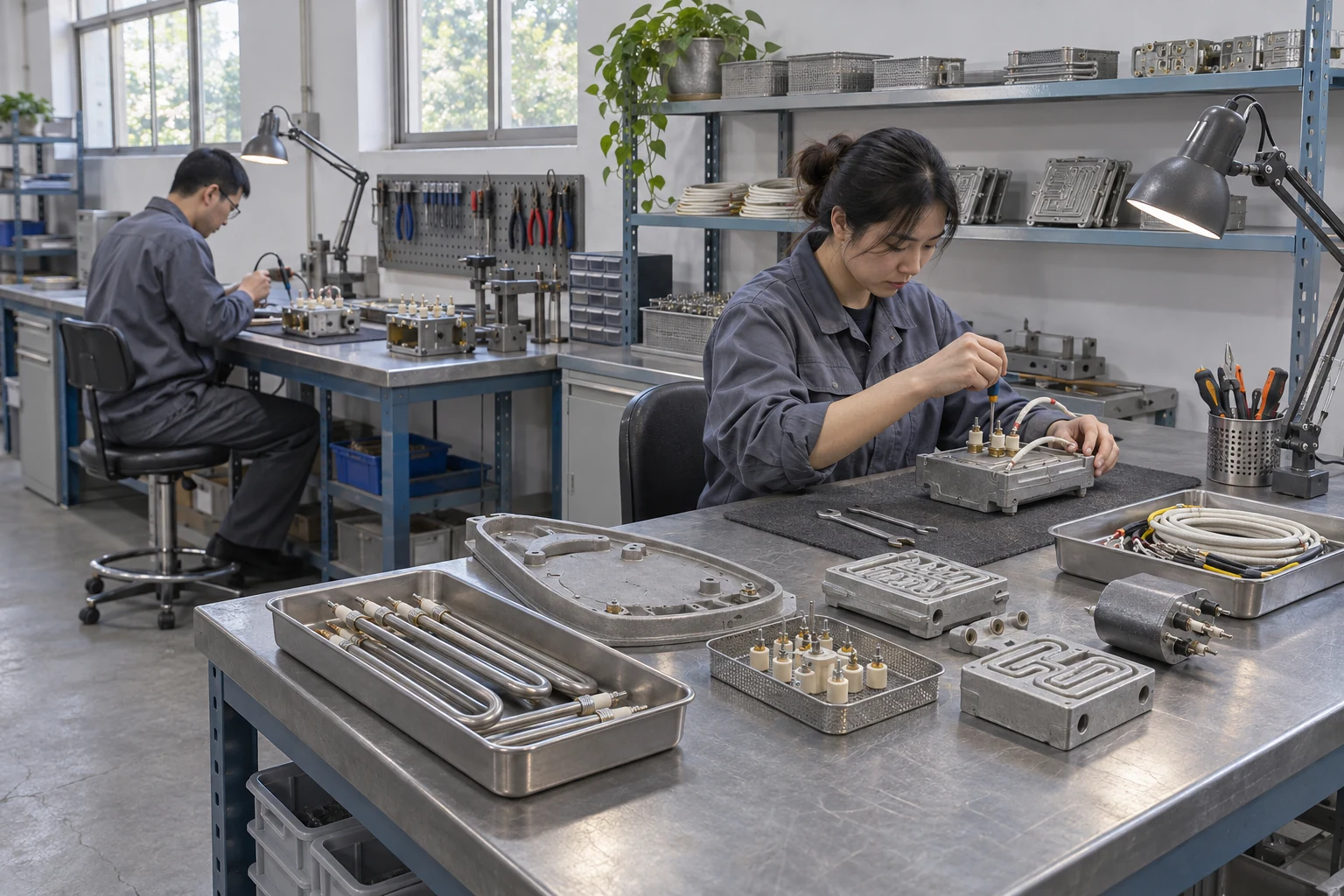
Illustrative heating component assembly workstations
Heating component workflow illustration

Heating Components Within the Production Route

A heating element.
A considered installation.

Develop the heater with the metal features and connections it depends on. Tubular element production and metal casting are distinct processes that can be brought together where the product design calls for it.

Review your heating component

Start with a Clear Heating Specification

Send the information available for your project. Open points can be reviewed with the drawing and application.

What to Specify

Drawing & quantity
Profile, dimensions, revision, samples and expected order volume.
Electrical requirement
Supply voltage, required heat output and any defined resistance requirement.
Working conditions
Heated medium, target temperature, contact or flow, duty cycle and environment.
Installation
Mounting points, contact faces, clearances and any integrated metal body.
Connections
Terminal position, leads, routing and control or protection interfaces.
Approval & delivery
Required checks, acceptance criteria, documentation, packing and target timing.
Before Production Release

Review the sample.
Confirm the specification.

Approve the component drawing, electrical requirements and agreed evaluation results. Record the installation conditions, acceptance criteria and any open points before production begins.

Discuss your project

Heating Component FAQs

What information is needed for a heating component quotation?

Send the drawing or reference sample, the required quantity, supply voltage and heat output. Describe the medium being heated, target temperature, contact or flow conditions, duty cycle, environment and installation. Include connection details and any required checks or documentation.

Are tubular heating elements the same as die-cast parts?

No. A tubular heating element has its own construction and manufacturing process. A heater can also be integrated with a cast metal body or plate where the design requires it. The heating element and metal part requirements should be reviewed separately and then together as an assembly.

Can the shape, mounting and connections be customized?

These features can be reviewed against your drawing and application. Define the profile, installation envelope, fixing points, contact surfaces, terminal positions and lead routing. The feasible construction and final scope are confirmed during the project review.

Does the power rating determine the working temperature?

The temperature also depends on the heat transfer, medium, installation, duty cycle and control arrangement. State the intended operating conditions so the component and sample evaluation can be planned around the application.

Which electrical checks can be included?

Continuity, insulation resistance and dielectric strength checks are defined for the heater specification. Agree the methods, conditions, limits, frequency and records in the project test plan. Any additional test requirements should be reviewed before quotation.

What documentation is needed for the finished appliance?

Documentation depends on the component, the intended appliance and the target market. Identify the applicable requirements during the project review. Component documentation alone does not establish approval of the complete appliance.

Let’s Review
Your Heating Project

Send your drawing and tell us how the heater will work in your product. MSdean will review the component design, manufacturing route and quotation with you.

  • Drawing, electrical requirement and working condition review
  • Shape, mounting and connection planning
  • Sample approval and agreed inspection requirements
  • One contact for the heating component and its metal interfaces
info@msdeanmfg.com

Tell us about your project

Start with the details you have.

Portfolio preview. This form is for demonstration only.

The details you provide will be used to respond to your project inquiry.

Discuss your project

Share your part drawing, material and expected quantity.

Portfolio preview. This form is for demonstration only.

The details you provide will be used to respond to your project inquiry.