
Process guide · By MSdean
What Is Aluminum Die Casting? Process, Benefits & Applications
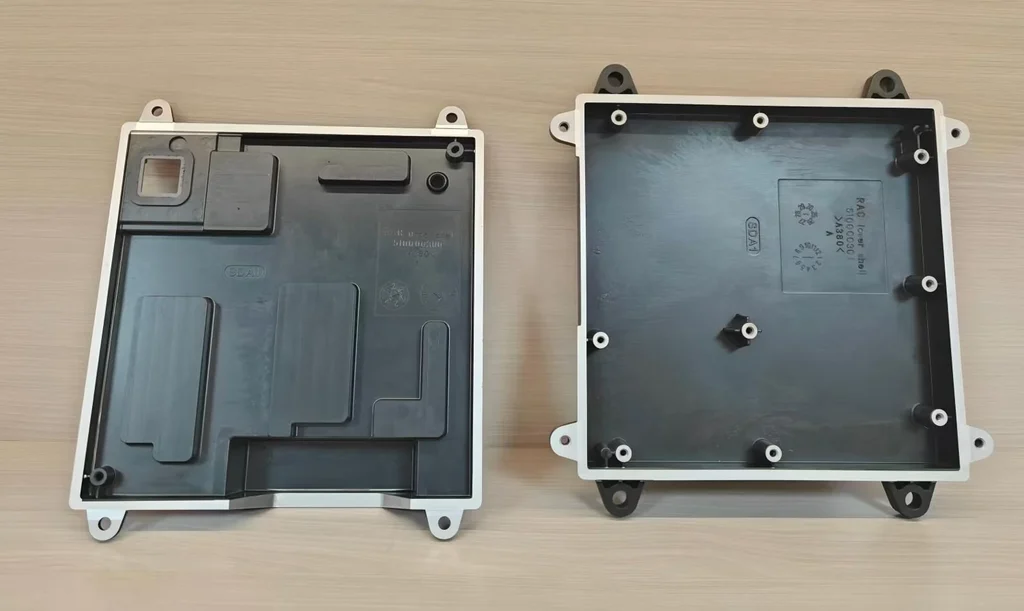
Aluminum die casting is a manufacturing process that forces molten aluminum alloy into a reusable steel mold under high pressure. The metal solidifies inside the mold, which opens so the casting can be removed. The process produces repeatable metal parts with features such as ribs, mounting bosses and thin walls. [1]
If you are comparing ways to manufacture an enclosure, bracket or housing, the useful question goes beyond “what is aluminum die casting?” You also need to know whether it suits your design, production quantity and finished-part requirements.
This guide explains the process, its practical advantages and limitations, and the decisions to make before investing in a production mold.

How does aluminum die casting work?
Most aluminum high-pressure die casting uses a cold-chamber machine. The alloy is melted in a separate furnace and a measured amount is transferred into the shot sleeve for each cycle. “Cold chamber” describes the injection arrangement; the aluminum itself is molten. [1]
1. Prepare and close the die
The two mold halves form the part cavity. The die is prepared for the next shot, including any required cleaning and release-agent application. The machine closes and clamps the halves together before injection.
2. Transfer molten aluminum to the shot sleeve
A ladle or dosing system transfers the required quantity from the holding furnace. Metal condition, dose consistency and temperature control affect the stability of the casting process.
3. Inject: slow shot, fast shot, then intensification
The plunger first moves through a controlled slow-shot phase to advance the metal while limiting air entrapment. It then accelerates for fast filling of the cavity. Once the cavity is filled, an intensification phase raises metal pressure to support feeding while the gate remains open. The settings depend on the part and tool; injection is not one constant-speed push. [2]
4. Solidify, open the die and remove the casting
The tool removes heat while the machine keeps the die closed. After sufficient solidification and cooling, the die opens and ejector pins push the casting free. A handling device or operator removes it, depending on the cell arrangement. [2]
5. Trim, machine and finish
The casting still has excess metal from the feed system and may have flash along the parting line. Trimming and deburring remove this material. Machining then creates the precision features required by the final drawing, followed by the specified surface treatment and inspection.
At MSdean, custom aluminum die casting is coordinated with these later operations so that the project is reviewed around the component you need to receive.
Which aluminum alloys are used?
Die cast parts normally use an aluminum alloy rather than pure aluminum. Alloy selection changes castability, mechanical performance, corrosion behavior and finishing options.
| Alloy | Typical starting point | What to confirm |
|---|---|---|
| A380 | A widely specified general-purpose die casting alloy. | Governing specification and the properties the finished part needs. |
| ADC12 | A common grade on Asian die casting drawings and quotations. | The exact material standard and required composition. |
| A383 | Often considered for intricate geometries and filling requirements. | Whether it is explicitly approved for the project. |
Material names across standards are useful comparison points, but do not assume that similar grades are interchangeable. Put the required grade and specification on the drawing, and approve any proposed substitution before production. For an overview of commonly specified grades, see the alloy reference below.
Advantages of aluminum die casting
- Complex features in one component. Ribs, bosses and mounting features can be cast into the geometry, potentially reducing separate parts and assembly work.
- Repeatability across production runs. A reusable steel tool makes the process suitable for repeated manufacture of an established design.
- Efficient production at suitable volumes. Once the tooling and process are validated, each cycle reproduces the part shape with less material removal than machining that shape from solid stock.
- Useful weight and thermal properties. Aluminum alloys can support lightweight housings and heat-dissipating components, with performance depending on the selected alloy and design.
These advantages explain its use in electronic enclosures, appliance housings, lighting components, automotive housings and industrial equipment parts. They do not remove the need to validate each application. [1]
Limitations and quality risks to understand
A die casting can look acceptable and still need further checks before it is ready for assembly. Define acceptance around the part’s function.
Porosity and pressure tightness
Gas entrapment and solidification shrinkage can create internal pores. Machining may expose them, especially on sealing surfaces. An as-cast visual inspection alone cannot establish leak tightness. Identify pressure-critical areas and agree the relevant inspection or leak-test requirements. Vacuum-assisted processes can reduce gas porosity, but process selection still needs engineering review. [4]
Tooling investment and design changes
The steel mold is an upfront investment. A design revision after tool manufacture can require modification or replacement of tool components. Resolve important interfaces and open design questions before releasing the mold.
Machining and surface finish
A casting is a useful starting shape, but precision bores, threads and sealing faces often require secondary operations. Cosmetic requirements also need early attention: define visible surfaces, acceptable marks and the finish approval method. [5]
Finishing depends on the alloy. For example, the silicon and copper in common die casting alloys can make a uniform conventional anodized finish difficult to achieve. Discuss the required result and approve representative samples. [6]
Aluminum die casting vs. CNC machining
Both processes can produce aluminum components, but they have different cost structures and design constraints. Use the comparison below as a starting point for a project review. [7]
| Decision | Aluminum die casting | CNC machining from solid |
|---|---|---|
| Upfront investment | Dedicated production die and process validation. | Programming, setup and any required fixtures. |
| Design stage | Often attractive once geometry is established. | Often practical for prototypes and changing designs. |
| Repeat production | Tooling cost can be spread over repeated orders. | Machining time remains a major recurring cost. |
| Critical features | May need machining after casting. | Created directly through machining operations. |
| Material choice | Alloys selected for the casting process. | Can use wrought grades such as 6061 or 7075. |
A common route combines the two: cast the main geometry, then machine selected interfaces. Our CNC machining capability supports this approach.
Compare the finished component. A casting quote that excludes machining, coating and inspection cannot be compared directly with a quote for a ready-to-assemble machined part. Ask both suppliers to price the same delivery scope.
Design and cost decisions before tooling
A design for manufacturing review connects the drawing with how the part will fill, cool and leave the mold.
- Keep wall sections reasonably uniform. Heavy junctions and abrupt changes complicate solidification.
- Use draft and rounded transitions. Draft helps release the casting; radii improve flow and reduce sharp stress concentrations.
- Plan ribs and bosses carefully. Add stiffness without simply adding large masses of metal.
- Separate cast and machined requirements. Agree critical datums and tolerances feature by feature.
These principles need to be applied to the actual geometry. There is no universal wall thickness, draft angle or tolerance that fits every aluminum die casting. [8]
For purchasing, request a breakdown that includes the mold, sampling, casting, machining, surface finishing, inspection and packaging. Also clarify tool ownership, maintenance responsibilities and what happens if the drawing changes.
There is no fixed quantity at which every project becomes cheaper to die cast. Compare total project cost over realistic demand, including the work needed to deliver an accepted component. A low casting price is less useful if an important operation is missing from the quotation.
What should you send for an aluminum die casting quotation?
A clear RFQ helps the supplier identify questions before they become tooling changes or sample delays. Include:
- A 3D model and revision-controlled 2D drawing. Use the drawing to define tolerances, datums, threads and critical features.
- The material requirement. State the alloy, governing specification and any required material documentation.
- Expected quantities. Give the first order, normal batch size and estimated annual demand.
- The application. Explain loads, operating conditions, mating parts and any sealing requirements.
- The finished surface. Identify cosmetic zones, coating requirements, masking and sample approval criteria.
- The acceptance and delivery scope. Specify inspection reports, testing, packaging and the target schedule.
If some details are still open, label them as questions. An early discussion is more useful than a quotation built on assumptions. Our quality control overview is a useful place to start aligning the inspection scope.
Frequently asked questions
Is die-cast aluminum the same as aluminum?
“Aluminum” describes the material family. “Die-cast aluminum” describes an aluminum alloy component made by die casting. Its properties depend on the alloy, casting quality, geometry and any subsequent processing.
Is aluminum die casting suitable for small quantities?
It can be technically feasible, but a dedicated mold may make a small order expensive. Compare the tooling and finished-part costs with alternative routes, especially if the design is still changing.
Do aluminum die cast parts need CNC machining?
Some features can remain as cast. Others, such as precision fits, sealing faces or specified threads, may need machining. Review the final drawing to decide which operations are necessary.
How long does an aluminum die casting mold last?
Tool life varies with the design, alloy, tool material, thermal conditions and maintenance. Ask for the supplier’s proposed tool-life terms and maintenance plan for your specific project.
Have a part in mind?
MSdean coordinates tooling, aluminum and zinc die casting, machining, surface finishing and inspection around your component requirements.
Share your drawing, expected quantity and application. We can discuss the manufacturing route and the details that need to be agreed before production.
Get in touchTechnical references
- North American Die Casting Association — Frequently Asked Questions.
- Basic Aluminum — Die Casting Process Description.
- Dynacast — Aluminum Alloys.
- ASM Handbook — Die Casting.
- Chicago White Metal — Die Casting Design and Specification Guide (PDF).
- Miyaki — Anodizing for Die-Cast Aluminum.
- Protolabs — Machining vs. Casting: Volume and Process Selection.
- Dynacast — Die Casting Design for Manufacturing FAQ.